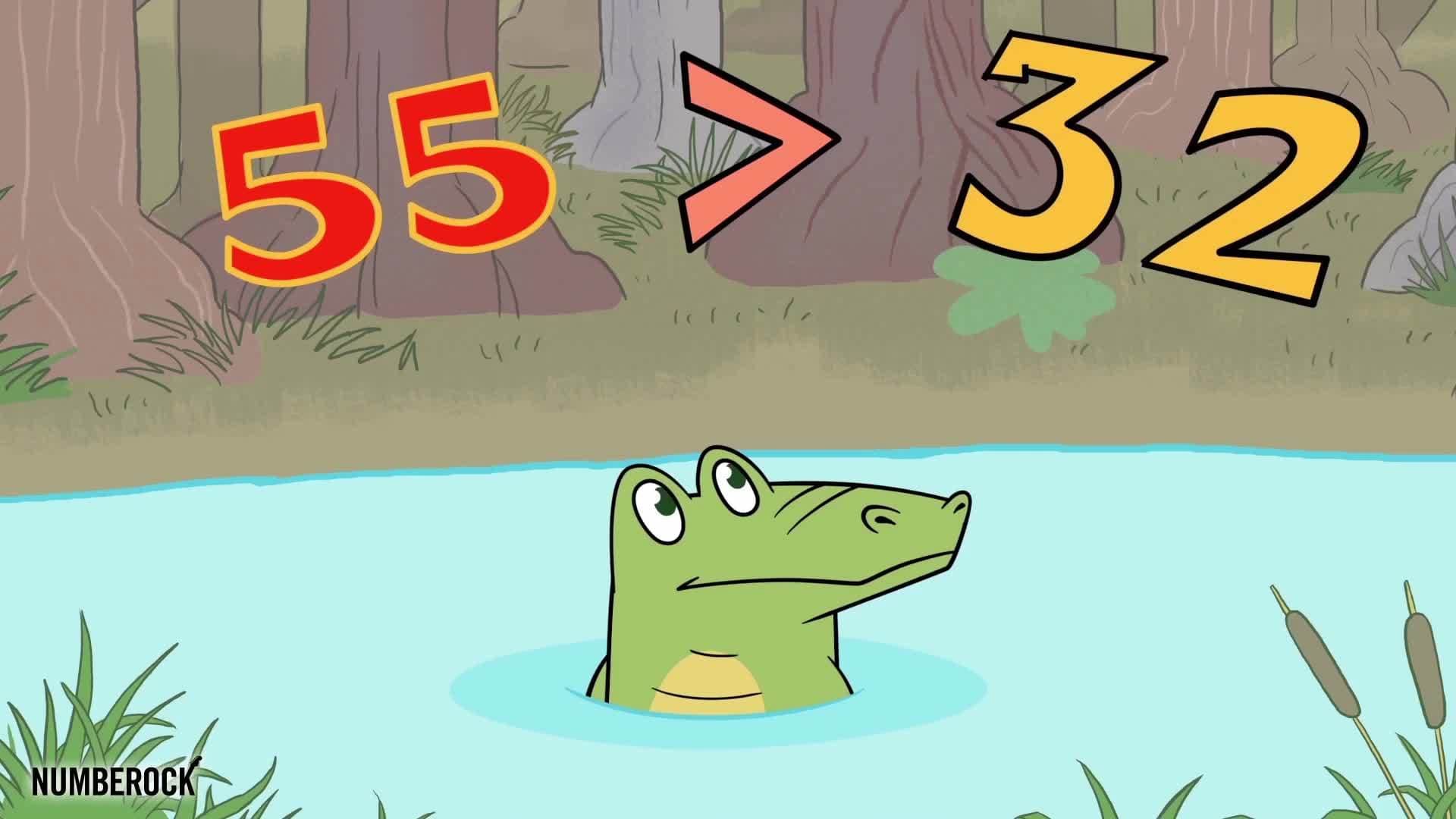
This video shows how to identify whether the number of objects in one group is greater than, less than, or equal to the number of objects in another group, e.g., by using matching and counting strategies. Understand that the two digits of a two-digit number represent amounts of tens and ones. Understand the following as special cases: 10 can be thought of as a bundle of ten ones — called a "ten." The numbers from 11 to 19 are composed of a ten and one, two, three, four, five, six, seven, eight, or nine ones.
Tips for Parents
-
Here's how to talk to your child about it >>>
Hi your child, you've learned how to compare numbers using place value! You can now tell if one group has more or less objects than another. Remember, 10 is a bundle of ten ones and numbers 11-19 have a ten and some ones. Great job!
-
4 activities you can do with your child now >>>
- After watching the video, ask your child to identify the number of objects in different groups around the house (e.g. number of toys on the shelf vs number of toys on the floor). - Use a deck of cards to play a game where you draw two cards and ask your child to compare the numbers by place value (e.g. 34 vs 23). - Take a walk outside and ask your child to identify which tree has more or less leaves by counting them. - Give your child a set of objects (e.g. blocks, crayons) and ask them to group them in different sets based on quantity and compare them.
-
Pretend play with your child >>>
Game Name: Greater or Lesser Instructions: You and your child take turns holding up a random number of fingers. The person with the greater number of fingers wins that round. Before starting, you can ask your child if they think their number will be greater or lesser than yours. This game will help your child practice comparing numbers and identifying which is greater or lesser.
-
1 moral thought for your child inspired by this >>>
Remember, numbers can be compared by their place values. Always look closely and count carefully before making a decision. Practice makes perfect!